
PROJECT
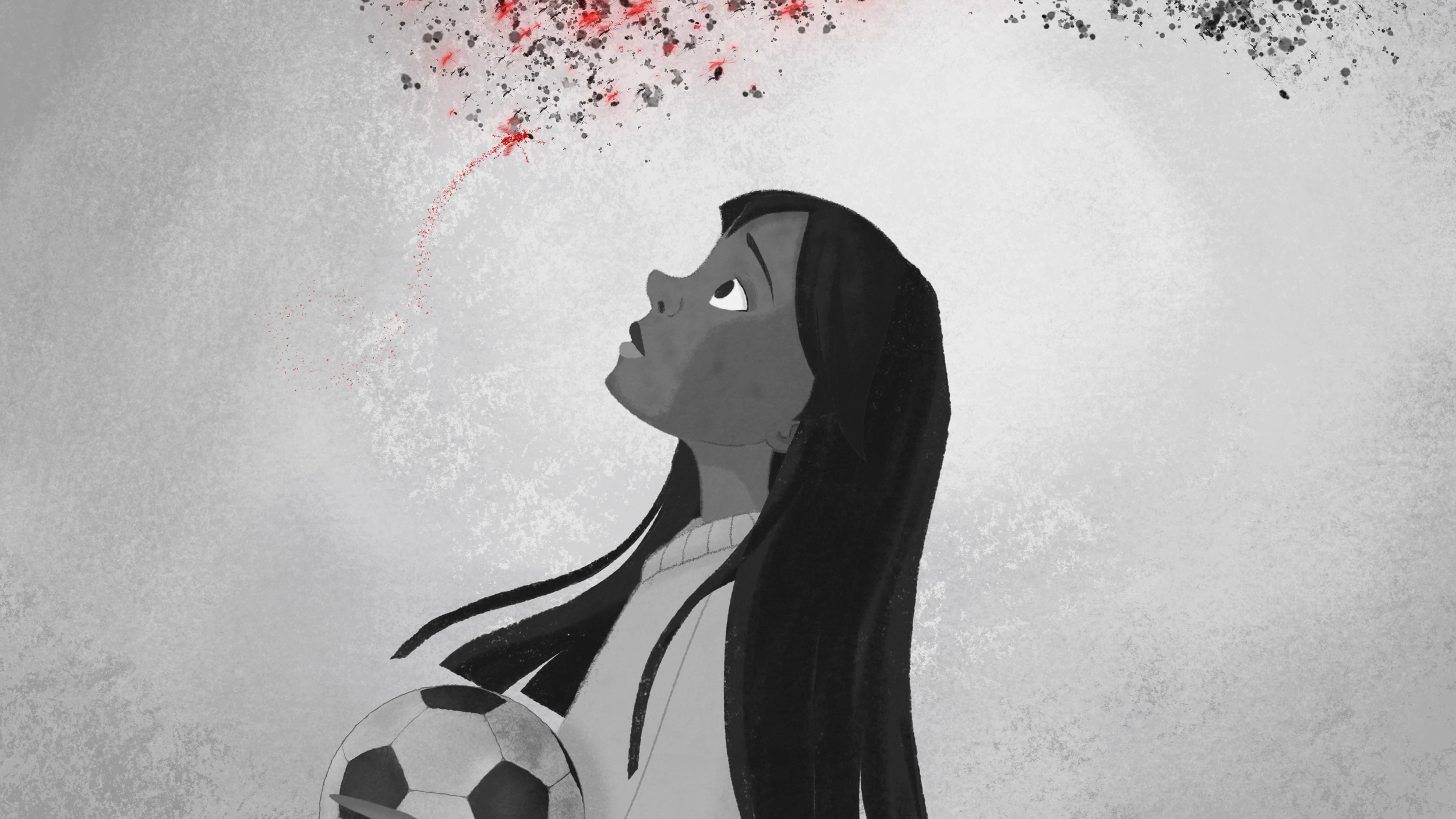
Releasing Hope is an inspirational short film about a young girl’s journey as she confronts the Spectre of Disease, a spectral entity made of millions of mosquitoes that serves as a metaphor for the real impact of mosquito-borne illnesses.
The story is told entirely without dialogue, using emotion and visual storytelling to bring a complex scientific challenge to life.
One of the main challenges of the project was making the World Mosquito Program’s mission, as well as its groundbreaking Wolbachia method, accessible to a broad audience, showing how science and communities can work together to fight this global menace.
ROLE
My role as Lead Animator was to take part in the creative process from the beginning, contributing to visual development, storyboard discussions with the storyboard artist, as well as helping define the artwork and animation style.
The film had two key aspects: on one hand, it relied on subtle yet believable performances; on the other, it presented the challenge of technically demanding sequences, such as bringing the Spectre to life through particle simulations, 3D, and the seamless blending of 3D and 2D.
ANIMATION
For the most part, the shots I worked on combined 2D character animation, 3D, and particle simulations. I also took on the role of 3D artist, managing all 3D animation and particle effects.
Character animation was mainly created in After Effects and Moho, using scripts and plugins such as Joystick ’n Sliders, Motion Studio, and Wave-O-Matic, as well as simple techniques like null-based parenting to create secondary motion, including wind, cloth, and water movement.
TOOLS
This project took place over several months, sometimes with weeks between each stage. That gave us the time to experiment and research different tools before moving into production.
During this time, I had the chance to test a variety of tools, including Trapcode Form, Trapcode Particular, and Cinema 4D. This stage was critical and helped us define a workflow that worked for the project. In the end, we decided to rig and animate the Spectre in Cinema 4D, then bring the animation data into After Effects, where we used Stardust for the particle simulations. This approach allowed us to quickly test different settings while compositing the final simulation in real time with the final artwork.
MIX MEDIA
3D was also integrated into other shots to help us develop cloth simulations, vehicle animation, and hair dynamics. These elements helped add depth and realism to the project.
The intersection of different skills, artists, and tools, as well as disciplines like 2D and 3D, helped us create a visually engaging film that hopes to raise awareness of the incredible work carried out by the WMP across the world.
CREDITS
CREATIVE - ANIMATION DIRECTOR
Karl Doran
PRODUCER
Sarah Ritchie
EXECUTIVE PRODUCERS
Bruno Col, Alex Jackson
MUSICAL SCORE
Efterklang
WRITER
Michelle Collier
LEAD ARTIST
Eleonora Asparuhova
LEAD ANIMATOR & 3D ARTIST
Guilherme Gomes
ANIMATORS
Guilherme Gomes, James Lawson, Rosa Kennedy, Tom Mathieson, James Horton
EDITOR
Karl Doran
DESIGNER
Josh Taylor
STORYBOARD ARTIST
Erinc Kargan
ART ASSISTANT
Georgia Collins
SOUND DESIGN
Rob Williamson